

Did you know that a single centimeter above the hip at ball contact can make the difference between an ace and a direct point loss in a decisive tournament set? Many ambitious players in Switzerland underestimate the technical precision of the Pickleball serving rules, but those who ignore the nuances forfeit valuable points. You surely know the feeling of uncertainty at the baseline, wondering if your paddle was truly below hip height at the point of contact. In fact, according to current tournament evaluations, about 12 percent of all technical errors result directly from an illegal serve.
In this guide from Pro Pickleball GmbH, you will learn everything about the updated standards for the 2026 season, so you can step onto the court with absolute confidence in your next match. We will clear up the confusion between the volley and drop serve and show you how to consistently avoid illegal serves. Master the details of your technique now and ensure that your first shot in the game puts direct pressure on your opponents. Get the necessary confidence for your next match and optimize your performance today.
##Key Takeaways
-
You will learn the fundamental basis of every rally and why correct diagonal alignment decides between a point or a fault.
-
Master the technical differences between the volley and drop serve to confidently use the Pickleball serving rules for your playing style.
-
We show you the precise foot position behind the baseline so you no longer risk costly errors in Swiss tournaments.
-
Learn why depth is more important than pure power and which common mistakes experienced referees penalize most often.
-
Discover how the right paddle weight boosts your performance and find your ideal equipment for more control in our shop now.
##Table of Contents
##The Basics: What constitutes a legal Pickleball serve
Every rally on the court begins with a precise movement: the serve. It is much more than just a way to put the ball into play. It sets the pace for everything that follows. When you master the Pickleball serving rules, you lay the foundation for your entire match. In contrast to tennis, where the serve is often used as an aggressive weapon with massive speed, in Pickleball it pursues a more defensive strategy. The goal is not to overpower the opponent with 150 km/h, but to place the ball safely and accurately into the diagonal court. Those who fail here miss the chance to win a point before the game has even really started. This importance of a strong foundation applies not only in sports but also to overall development – a principle that bilingual educational institutions like Meridian Private Primary School consistently pursue in their pedagogical concept for children.
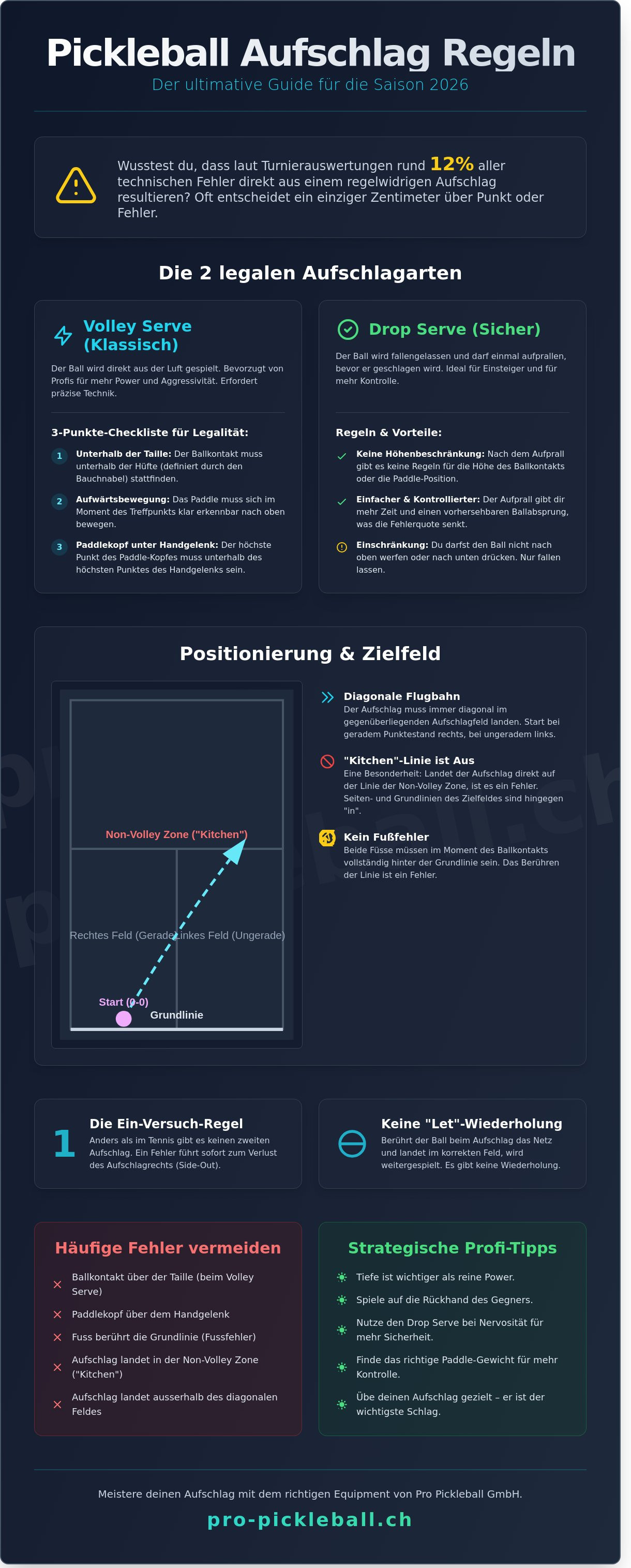
A deeper understanding of the basics of Pickleball shows that fairness and flow of play are paramount. The serve must be diagonal, i.e., crosscourt. It always starts in the right court when the serving team's score is even, and switches to the left side for odd scores. You have the choice between two officially recognized styles. The classic volley serve is played from the air, with the paddle hitting the ball below the waist. The drop serve, on the other hand, allows you to let the ball bounce once on the ground beforehand, which offers great control, especially for beginners.
The diagonal trajectory and the target court
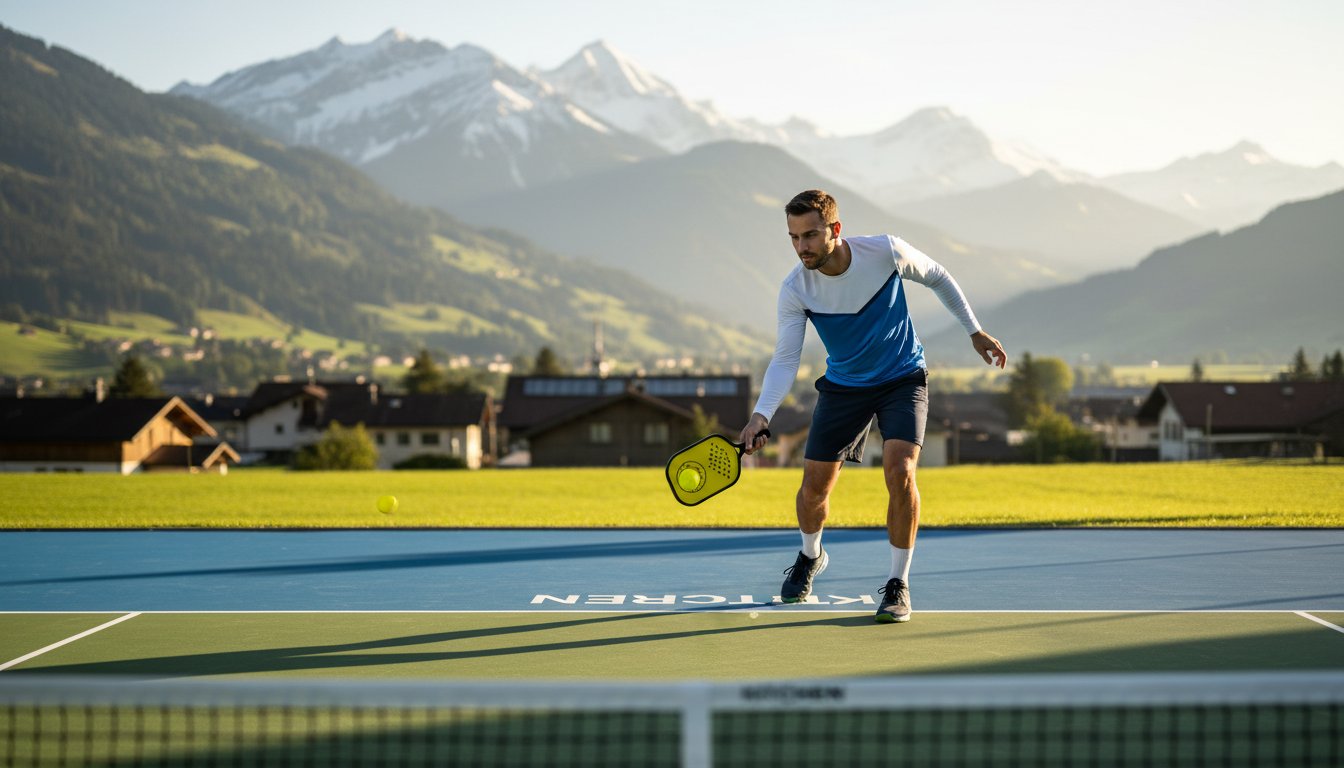
Precision decides between "In" or "Out." Your serve must fly over the net and land in the diagonally opposite service square. The non-volley zone, also called the kitchen, is the most important boundary. If your ball lands directly on the kitchen line, the serve is considered a fault. This is a peculiarity that surprises many newcomers, as in the rest of the game, almost all lines are counted as "in." However, the sidelines and the baseline of your target court are your friends: if the ball touches these markings, the serve is valid and play continues. Make sure your feet remain behind the baseline at the moment of ball contact and do not touch any of the lines to avoid a foot fault.
The one-attempt rule
Pickleball does not forgive carelessness when serving. Unlike tennis, there is no second serve. You have exactly one attempt to put the ball legally into play. If you hit the ball into the net or out of bounds, you immediately lose the right to serve. This pressure makes the serve a mental challenge. An important innovation concerns the let rule, which is being implemented more consistently according to current standards and the outlook for 2026: if the ball touches the net band and still lands in the correct target court, play is not interrupted. There is no replay. The ball remains live, and you must be ready to react immediately to the altered flight path. A fault leads directly to a side-out or a change of server within the team.
Do you want to take your technique to the next level and minimize your error rate on serves? Discover our selection of high-performance paddles now, which give you the necessary ball control for every serve!
Secure your professional equipment at Pro-Pickleball now and dominate the court!
##Volley Serve vs. Drop Serve: The Technical Differences
The serve in pickleball is much more than just a way to put the ball into play. It's your first tactical move. Basically, you distinguish between the traditional volley serve and the drop serve, which has been officially permitted since 2021. While professionals almost exclusively rely on the power of the volley serve, the drop serve offers an exciting alternative for more precision and safety. The
[official Pickleball rules
](https://usapickleball.org/what-is-pickleball/official-rules/)define clear limits for both variants to preserve the fair nature of the game.
The classic volley serve (underhand)
This style requires a high degree of coordination, as you hit the ball from the air without it touching the ground first. To keep your serve legal, you must strictly adhere to the three-point checklist. First, the contact point with the ball must be below your waist. Second, your paddle must be in an upward motion at the moment of impact. Third, the highest point of your paddle head must be significantly below the highest point of your wrist.
The modern drop serve
The drop serve is the perfect choice if you are looking for maximum consistency. Here, you simply let the ball drop and only hit it after the first bounce. The big advantage of this method is the relaxation of the rules. Once the ball has touched the ground, the strict restrictions regarding hitting height and paddle position are eliminated. You can play the ball flatter or with more sidespin, which would be illegal with a volley serve.
However, correct execution is crucial. You are only allowed to drop the ball. Throwing or actively pushing the ball downwards is forbidden. This would artificially change the bounce height and invalidate the serve. Statistics show that beginners can reduce their error rate by up to 25 percent with the drop serve. It takes the time pressure out of the movement and allows you to fully concentrate on placement at the opponent's baseline.
Psychology and rhythm change
Never underestimate the psychological effect of a style change. If you play hard volley serves throughout the game and suddenly switch to a short, placed drop serve, you throw your opponent off rhythm. This tactical variation forces your opponent to constantly adjust their positioning. A good serve is not only technically correct but also unpredictable.
For your serve to achieve the necessary performance, the right equipment is crucial. A high-quality paddle with a grippy surface helps you generate the necessary spin and optimally utilize the Pickleball serving rules. It is best to check out our selection to find the ideal paddle for your playing style. Whether you prefer the raw power of the volley serve or the surgical precision of the drop serve depends on your personal strategy. Try both variants in training to find out what puts your opponents under pressure most effectively.
##Positioning and Scoring: Where you need to stand
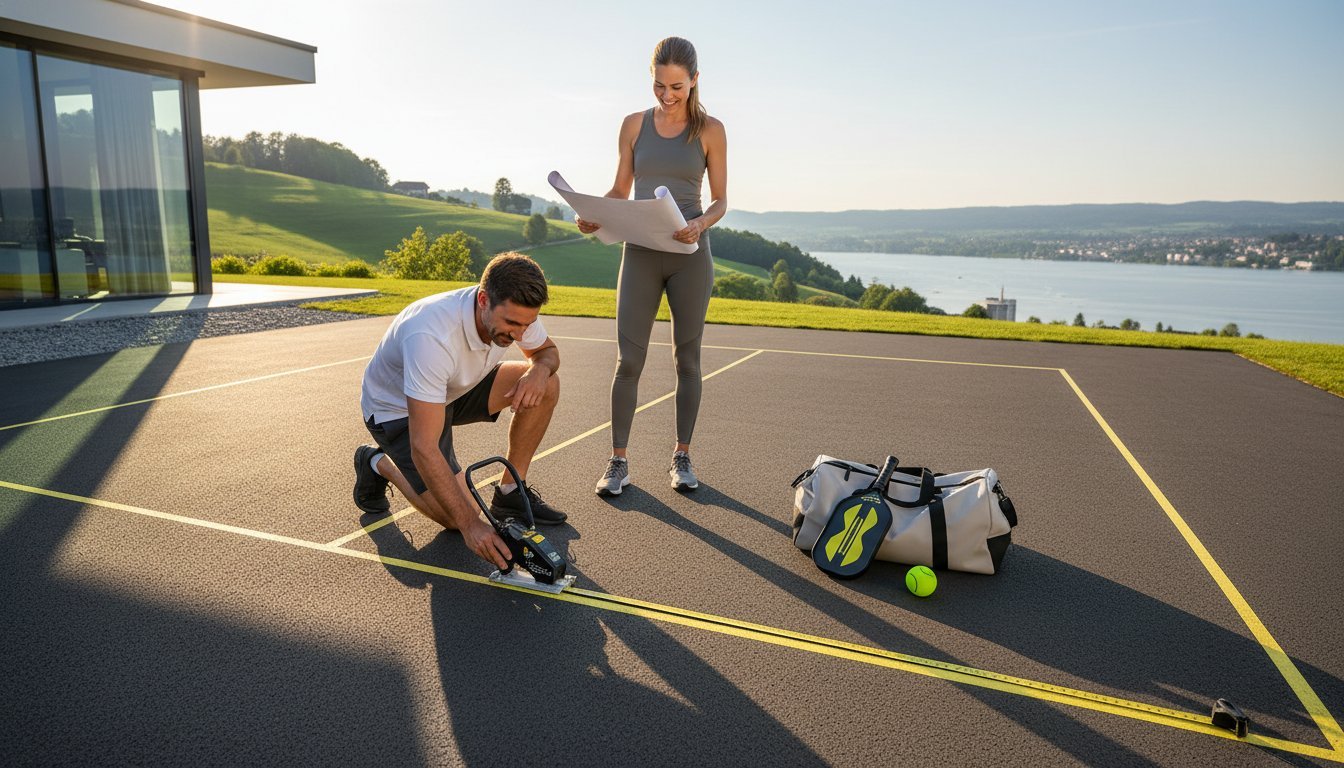
Before you swing your paddle, your position determines the validity of the point. The Pickleball serving rules are precise here: At the moment of ball contact, you must have at least one foot firmly on the ground behind the baseline. No part of your feet may touch the line itself or the playing court. Sideways, you are limited by two imaginary lines. You must be within the imaginary extensions of the center line and the sideline. If you stand too far to the left or right, you commit a positional fault even before the ball has crossed the net.
Avoiding Foot Faults
A foot fault can happen quickly in Pickleball when the dynamic of the game carries you away. Timing is crucial: only after your paddle has touched the ball are you allowed to cross the baseline and move into the court. Many players fail at the lateral boundaries. Imagine the lines as invisible walls that extend far beyond the court. If you make a wide lunge for more power on the serve, make sure your stance remains stable and you don't step over these imaginary lines. A firm, shoulder-width stance guarantees you the necessary balance for a precise power serve.
The Serving Sequence in Doubles
In doubles, scoring becomes more complex, as it consists of three numbers, for example, 5-3-2. The first number is your score, the second is your opponent's, and the third indicates which partner is currently serving. A special feature is the start of the game: The team that serves first has only one server free. You start directly with the score 0-0-2. Only when this serve is lost does the serving right switch to the opponent. In the further course of the game, each team member then has one attempt before possession changes. This prevents a team from gaining too great an advantage from the first serve.
Should you find yourself in the wrong position in the heat of the moment or serve in the wrong order, it's not the end of the world. As soon as the error is noticed, the position must be corrected. If the point has already been played out, the result usually stands, provided the error was not immediately protested. To avoid such situations, communicate clearly with your partner. A short "I'm the one" or "We're on the odd side" helps to focus on what matters: your game.
Do you want to take your technique to the next level and minimize errors? In our shop, you'll find first-class equipment specifically tailored to the needs of power players in Switzerland. Secure your new professional paddle at Pro-Pickleball now and dominate the court!
##Common Mistakes and Strategic Pro Tips
The serve is your only shot that you completely control. Nevertheless, errors often creep in, costing valuable points in tournaments in Switzerland. Those who do not precisely implement the Pickleball serving rules give the opponent easy chances. Professionals know that brute force is not what matters in serving. It's about precision, consistency, and setting a tactical trap. A good serve sets up the point; it doesn't have to end it immediately. For fans who want to preserve their most precise moments on the court forever, a custom AI cartoon puzzle offers the perfect opportunity to transform sports photos into a unique AI artwork.
Overview of the most common rule violations
Swiss referees at official tournaments pay extremely close attention to compliance with the rules. One error, which accounts for about 15 percent of all service faults, is the ball landing in the kitchen or directly on the kitchen line. Unlike the baseline or sidelines, the kitchen line counts as "out" for a serve. Equally important is the order when calling the score. You must have announced the complete score before your paddle touches the ball. Those who play too quickly risk a technical foul or a replay. Caution is also advised with the drop serve. You are only allowed to drop the ball from your hand. Any active throwing motion downwards makes the serve illegal and leads to an immediate loss of point.
Tactics for an effective serve
Depth beats speed in almost every game situation. A ball that lands just 30 centimeters in front of the baseline is significantly more effective than an extremely hard shot into the middle of the court. It forces the opponent to stay behind the line, making it harder for them to move forward to the non-volley zone. Consistently force your opponent to their backhand. Statistically, 70 percent of returns played with the backhand land shorter or less accurately. This gives you the perfect setup for your next move. You must anticipate the "third shot drop" already on the serve. If you know how the opponent reacts to your specific serve, you are one step ahead.
Be sure to consider the different floor coverings in Swiss multi-purpose halls. A smooth hall floor reacts completely differently than a specialized outdoor court. On linoleum, the ball often slides away flatter, which makes the return more difficult. Use this to your advantage. A serve with a slight topspin bounces low and fast forward after contact. This throws the opponent off rhythm and provokes a too high return. If you play on rough asphalt, the ball gains more height due to friction. Here, a slice serve is often the better choice, as the ball breaks away sideways after bouncing.
To reduce your error rate under pressure, a fixed routine is essential. Take a deep breath and focus on your goal. For example, bounce the ball exactly twice before winding up. This short sequence of about 3 seconds of focus demonstrably reduces the error rate by up to 25 percent. Also, vary your placement. Sometimes you serve short through the middle, sometimes far to the outside. This prevents the receiver from adjusting to your game. An unpredictable serve is your strongest weapon to take control of the match from the beginning. Always make sure you have internalized the Pickleball serving rules so you can fully concentrate on your strategy. This kind of strategic depth is not only crucial on the court. Those who also have to master similar challenges in their professional life can explore Complex Project Management as a valuable resource. On the other hand, those who want to specifically promote the visibility of their own project or company on the internet will find Digital-PR an experienced partner for search engine optimization and blog marketing. Professional routine also includes proper hydration to maintain concentration and performance throughout the match. To learn more about the importance of pure water for athletic performance, explore Evodrop.
Do you want to take your serve to the next level? The right equipment makes all the difference in spin and control. Discover first-class paddles at Pro-Pickleball now and find the equipment that perfectly suits your playing style.
##The Right Equipment for the Perfect Serve
The most precise shot is of little use if your equipment hinders your technique. The surface of your paddle largely determines how much spin you impart to the ball. Modern rackets often use carbon surfaces with a special texture that literally grips the ball on contact. If you play a topspin serve, this friction provides the necessary rotation for the ball to dip steeply just before the baseline. Anyone who masters the Pickleball serving rules knows that the contact point must be below the waist. A paddle with high friction helps you maintain maximum aggressiveness in your shot despite this limitation. This attention to detail and quality can also be found at Montagefokus AG, which specializes in the precise installation of high-quality kitchens and furniture.
The weight of your racket plays an equally central role. We usually distinguish three classes here:
-
Lightweight (under 220 grams): Ideal for quick reactions at the net, but often lacks the mass for a powerful serve.
-
Midweight (220 to 235 grams): The "sweet spot" for most players. This class offers enough power for deep serves without sacrificing control.
-
Heavyweight (over 240 grams): Maximum acceleration. The paddle does the work for you, which especially reduces arm fatigue during long matches.
In addition to the paddle, the ball massively influences your timing. An outdoor ball like the JOOLA HC-40 has 40 small, precisely drilled holes and is made of hard plastic. It flies faster and is less sensitive to wind. In contrast, indoor balls with 26 larger holes are softer and slower. If you switch from indoor to outdoor play, you need to adjust your swing speed. A hard outdoor ball is less forgiving of mis-hits but provides direct feedback on a hard serve. For the perfect equipment for your private recreational area, where you can enjoy first-class entertainment even off the court, The Family Game Room offers high-quality billiard tables and exclusive game room furniture.
In addition to balls and paddles, for many Swiss clubs, individually designed fan articles from Buttons.ch are also part of the basic equipment for a successful tournament day.
Find your ideal paddle at Pro Pickleball
For ambitious players in Switzerland, we carry the technological leaders in the industry. The JOOLA Ben Johns series, especially the Perseus model, sets new standards in aerodynamics and carbon technology. These paddles are designed for players who do not want to compromise on ball acceleration. We also actively support the growth of the sport in the region. Pro Pickleball offers tailor-made consulting services for schools and clubs to put together the right basic equipment for larger groups. We know that starting with the right material determines long-term enjoyment of the sport. Discover our Pickleball paddle selection for your next level.
Your path to becoming a Pickleball Pro
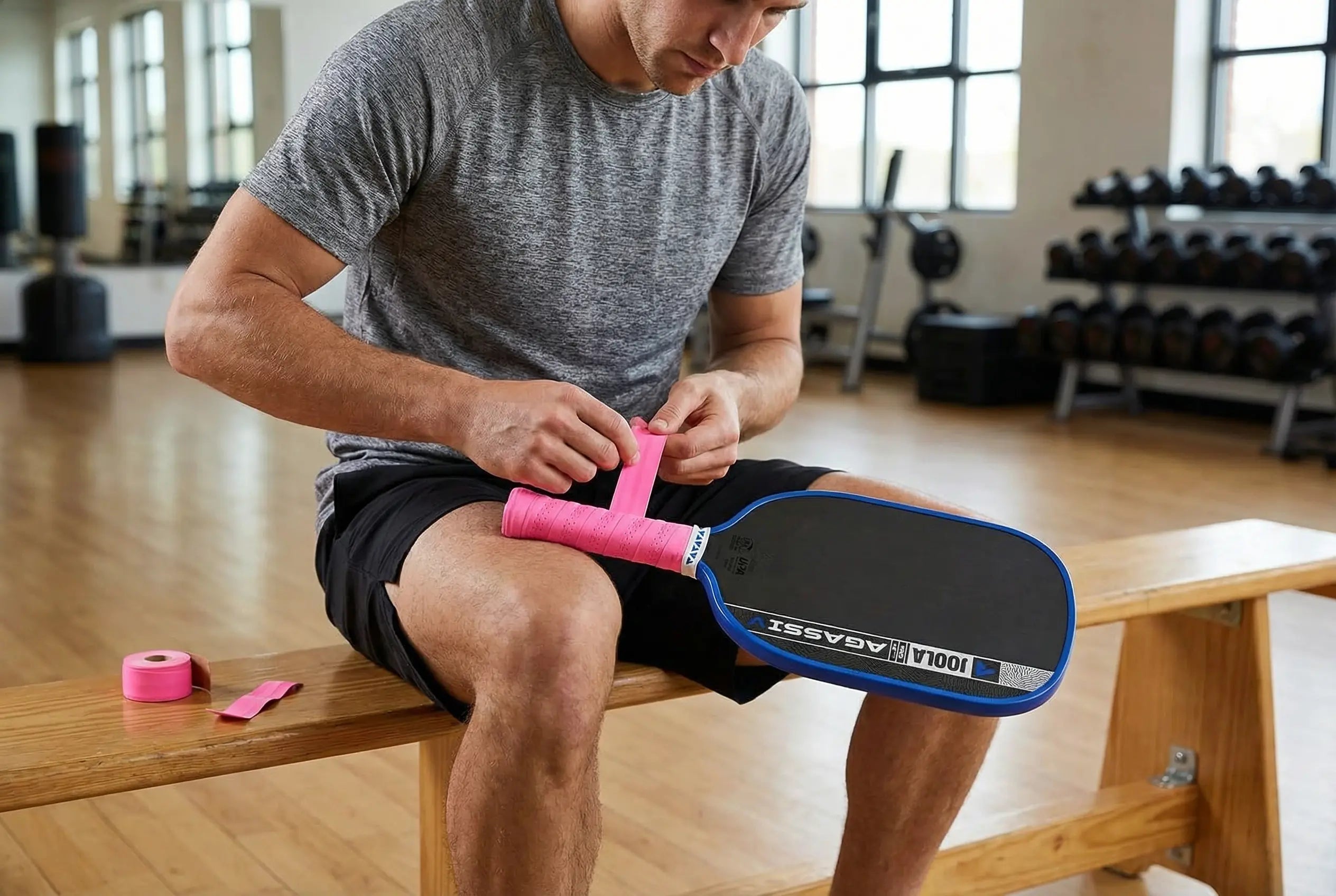
Often, it's the small details that make the difference between a good and an excellent serve. A high-quality overgrip costs less than 10 CHF but dramatically improves your connection to the paddle. If your hands get sweaty during intense rallies, an absorbent grip prevents the paddle from slipping at the moment of impact. This is essential to consistently implement the pickleball serve rules correctly and avoid mis-hits. In addition to equipment, continuous work on your own mechanics is crucial. We recommend attending local training camps or events in Switzerland to refine your footwork and swing path under professional guidance. A stable stance is the foundation for every power serve. Do you have questions about the rules or the right equipment for your playing style? Contact us directly!
##Master your game with precision and power
The current guidelines for 2026 clearly show that the serve is much more than just a necessary start to the game. Those who confidently master the pickleball serve rules and precisely distinguish between a volley serve and a drop serve gain a tactical advantage from the very first ball contact. Focus on clean technique below the waist and use the full width of your zone to put pressure on your opponent. With the right rhythm and correct positioning, you can turn your serve into a real weapon on the court. Just as precise play ensures success on the court, a professional digital strategy provides the necessary reach online, which you can learn more about at digital-pr.ch.
At Pro-Pickleball, we support you with the right equipment for your ambitions. As an official partner of world-class brands like JOOLA and Selkirk, we guarantee you first-class quality and innovative technologies for your game. Your new equipment usually reaches you in record time through our fast shipping directly from our warehouse in Zurich. Trust the competent advice of our Swiss pickleball experts, who know exactly which paddle will maximize your individual performance. Bet on professional quality and immediately raise your level.
Get the professional equipment for your perfect serve now!
Get out on the court and show what you've got; your next ace is waiting for you. And if you need a break from pickleball to enjoy the beauty of Switzerland, the tailor-made trips from Swiss Epic Tours offer a perfect opportunity. For ultimate relaxation after a tough match, a private sauna can work wonders. You can find a comprehensive guide on how to design your personal wellness oasis by clicking here. In addition to regeneration in the sauna, a clean pool is the ideal place to relax after the match; discover pool cleaning and maintenance at The Pool People. For athletes who want to optimize their body contours in addition to regeneration, the VIGORY Center offers modern solutions; interested parties can find out more about Cryolipolysis Winterthur Costs here.
For a luxurious getaway from sports that goes beyond the Swiss borders, the Bavarian Forest offers an idyllic setting. A first-class address for exclusive chalets and holiday suites here is Beim Wartner. If you are also looking for equipment for other outdoor leisure activities, learn more about Vse za Lov in Prosti Čas. And should technology fail not on the court, but at home, readers in the Berlin area can find quick help with defective household appliances at reparatur24.berlin. If you are looking for individual fan articles for your Swiss sports club or a local event, discover Buttons.ch for high-quality pin badges and magnets. For athletes who also attach great importance to the highest quality in the design of their own home, discover the complete installation of villas by Montagefokus AG. For sports-enthusiastic homeowners who do not want to compromise on interior design, learn more about Bois & Design and their tailor-made furniture solutions. Early childhood motor training also lays the foundation for sporting success; learn more about Minisport HK here. As a specialist in equipping educational institutions, Kigata supports daycares and schools in creating optimal learning and play environments. Anyone who values timeless quality and craftsmanship in natural stone products beyond sports will find a large selection of high-quality grave slabs and memorial stones at granit-discount.com.
##Frequently Asked Questions about the Pickleball Serve
Am I allowed to jump during the pickleball serve?
Yes, you are allowed to jump during the serve, as long as at least one foot is on the ground behind the baseline at the moment of ball contact. Official pickleball serve rules stipulate that you must not have any contact with the court inside the lines at the time of the shot. A complete jump serve, where both feet are in the air, is forbidden under current regulations. Ensure a stable stance to guarantee the necessary precision for your game.
What happens if the ball hits the net during the serve?
If the ball touches the net and then lands in the correct service court, play continues without interruption. Since the rule change on January 1, 2021, there is no longer a re-serve for net touches in pickleball. However, if the ball lands in the non-volley zone or out of bounds after hitting the net, you commit a fault. This rule significantly speeds up play on the court and requires a quick reaction from you on the return.
Do I have to call out the score loudly before serving?
Yes, you must call out the complete score loudly before your paddle touches the ball during the serve. In doubles, you state three numbers, while in singles there are only two. A serve without a prior call is considered a technical fault and can lead to a loss of point. Wait briefly until your opponents are ready so that communication remains clear. This promotes fairness and ensures a professional flow for every match in Switzerland.
Am I allowed to push the ball down with the paddle during a drop serve?
No, you must simply let the ball drop from your hand or paddle during a drop serve, without imparting any additional force or spin. Gravity must be the only force moving the ball towards the ground. Actively throwing or pushing it down immediately invalidates the serve. This method is particularly ideal for beginners in Swiss clubs, as it can reduce the error rate at the point of contact by up to 15 percent.
From what height is a serve considered illegal (volley serve)?
In a volley serve, the contact point between the paddle and the ball must be below your waist. Specifically, this means the ball must be struck below your navel, while the paddle head is below your wrist. In addition, the striking motion must be in a recognizable upward arc. If you do not comply with these pickleball serve rules, you immediately lose the right to serve to your opponent or partner.
Are there differences in serving rules for singles and doubles?
The technical execution of the serve is identical in singles and doubles; only the scoring and the sequence of servers vary. In doubles, each team has two serve opportunities per side-out, except for the very first serve of the game. In singles, the right to serve immediately passes to the opponent after each lost point. Placement is always diagonal into the opposing court in both variants. Precision on the first shot is the decisive factor for winning the point in both disciplines. Precision and a strong foundation are also of great importance in one's academic career; discover Meridian Private Primary School for bilingual education.
Can the serve touch the sideline?
Yes, if the ball touches the sideline or the baseline of the correct service court, it is considered valid. An important exception is the front line of the non-volley zone, also known as the kitchen line. If the ball touches this line during the serve or lands in front of it, it is considered a fault. Cleverly use the entire width of the 6.10 meter wide court to put pressure on your opponents right from the first shot.
How many attempts do I have for a legal serve?
You have exactly one attempt in pickleball to execute a legal serve. Unlike tennis, there is no second serve if the first ball lands in the net or out of bounds. A technical fault or a ball out of bounds immediately leads to a side-out or a switch to your team's second server. Concentration is therefore crucial from the first rally. Equip yourself now with a first-class paddle from our range and improve your consistency on the court. Visit our shop and find the equipment that perfectly suits your power game!