

Due to its accessibility and inclusivity, pickleball is indeed a mass sport. The sport has therefore gained worldwide popularity. When comparing pickleball to other sports such as tennis, badminton, and table tennis, several factors contribute to its broad appeal.
- Easy to learn: Pickleball is relatively easy to learn compared to tennis, badminton, or table tennis. This makes the sport accessible to people of all ages and skill levels. The rules are simpler than those of the aforementioned sports, allowing beginners to quickly grasp the basics. This simplicity enables new players to actively participate and enjoy the game from the start.
- Low physical exertion: Compared to tennis, pickleball requires less running and physical effort. The court is smaller, and the game is played with a lightweight paddle and a plastic ball with holes. Thus, less strength and agility are required to play effectively. This lower physical demand allows a wider range of people, including seniors or individuals with mobility issues, to comfortably engage in the sport.
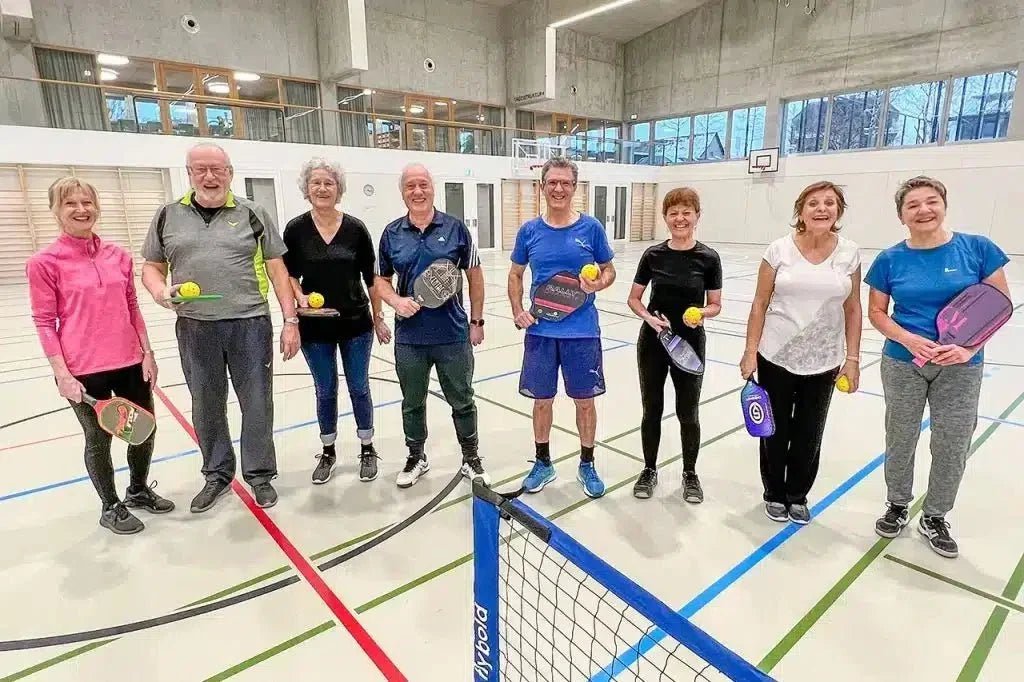
- Social interaction: Pickleball is known for its social aspect and its ability to build communities. It can be played in a doubles format, which promotes teamwork and camaraderie. The smaller court size allows players to be closer to each other, fostering conversation and interaction during the game. This social aspect attracts individuals looking for a fun and engaging way to spend time with friends, family, or other players.
- Facility accessibility: Pickleball is played in various settings, including indoor and outdoor courts. Many recreation centers, community parks, and schools have designed pickleball courts for public use (not yet in Switzerland). The relatively small size of the court required for pickleball makes it easier to convert existing tennis or basketball courts into pickleball courts, thereby improving accessibility.
Direct comparison with tennis, badminton, and table tennis
- Comparison with Tennis: Pickleball offers a less physically demanding alternative to tennis, making it accessible to a wider range of people. For beginners or individuals with limited mobility, the smaller court size and slower pace of play in pickleball are advantageous.
- Comparison with Badminton: Badminton shares some similarities with pickleball, such as the use of a lightweight paddle and a smaller court. Nevertheless, the rules and gameplay of pickleball are easier to grasp.
- Comparison with Table Tennis: Table tennis requires quick reflexes and precise hand-eye coordination. While table tennis offers a fast-paced and exciting game, the physical demands and skill level required may be higher than in pickleball.
In summary, the broad appeal of pickleball is due to several factors: its ease of learning, lower physical exertion, opportunities for social interaction, and growing popularity. These factors make it an inclusive sport that can be enjoyed by people of all ages and skill levels, thus differentiating it from tennis, badminton, and table tennis in terms of accessibility and broad appeal.