

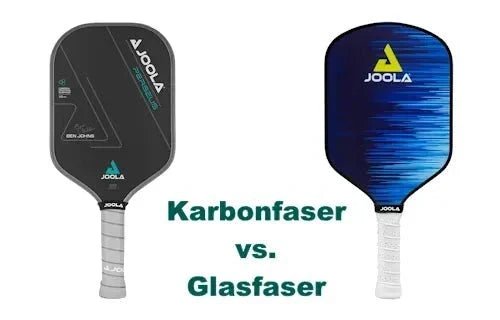
Two terms you've probably heard in connection with pickleball paddles and paddle surface construction are carbon fiber and fiberglass. But what are the differences between carbon fiber and fiberglass, and which composition is right for your game?
Carbon Fiber
Carbon fiber is a stiff, durable material that offers a better feel because it absorbs the pickleball's energy upon impact and distributes it more evenly across the paddle face. The result is less deformation upon impact, leading to more control and shot precision.
Fiberglass
Fiberglass is a composite material that is less stiff than carbon fiber, meaning it is more flexible upon contact, or in other words, provides more rebound when the ball hits the paddle surface. The result is higher energy return to the ball, leading to a stronger response.
Hybrid Blend of Carbon Fiber and Fiberglass
The choice would be too simple if there wasn't also a blend of the two options. A few manufacturers offer very good paddles with hybrid surfaces.
Further Designations
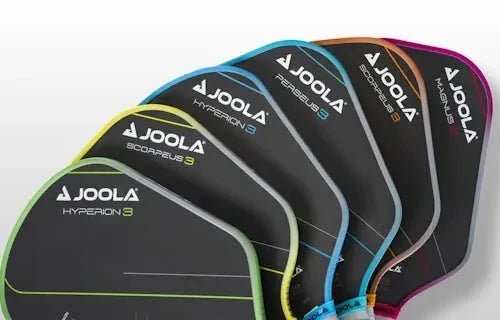
JOOLA, for example, has a wide selection of paddles with carbon fiber surfaces. Within JOOLA's range of carbon fiber paddles, there are various surface types that are still current:
Carbon Friction Surface (CFS) – a textured surface made from durable Carbon Flex 5 material. Offers optimal performance with high spin, optimal feel, and raw power. Found in the Hyperion, Perseus, and Scorpeus paddles.
Carbon Grip Surface (CGS) – a high-quality surface made from durable, long-lasting Carbon Flex3 material for a textured surface that provides optimal ball grip, feel, and spin production. Found in the Radius paddle.
Sources: Joola USA and own