PickleballPaddleSurfaces: Carbon Fiber vs. Fiberglass

Two terms you've probably heard in connection with pickleball rackets and racket surface construction are carbon fiber and fiberglass. But what are the differences between carbon fiber and fiberglass and which composition is right for your game?
Carbon Fiber
Carbon fiber is a stiff, durable material that provides a better feel because it absorbs the pickleball's energy upon impact and distributes it more evenly across the paddling surface. The result is less deformation at impact, resulting in more control and shot precision.
Fiberglass
Fiberglass is a composite material that is less stiff than carbon fiber, meaning it is more flexible upon contact, or in other words, provides more rebound when the ball hits the paddle surface. The result is a higher energy return to the ball, resulting in a stronger reaction.
Hybrid blend of carbon fiber and fiberglass
The choice would be too easy if there wasn't also a mix of the two options. A few manufacturers have very good paddles with hybrid surfaces on offer.
Other names
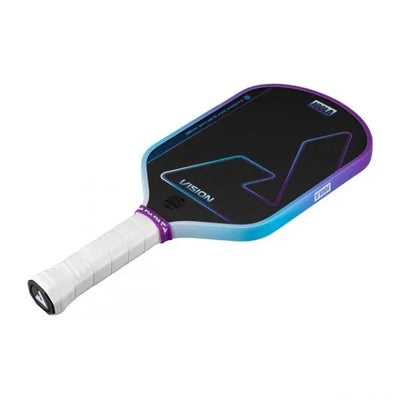
JOOLA for example has a large selection of paddles with carbon fiber surfaces. Within the JOOLA selection of carbon fiber paddles there are various surface types that are still current:
Carbon Friction Surface (CFS) - a textured surface made of a durable Carbon Flex 5 material. Delivers optimal performance with high spin, feel and raw power. Can be found in the Hyperion, Perseus and Scorpeus Paddles.
Carbon Grip Surface (CGS) - a high quality surface made from durable, long-lasting Carbon Flex3 material for a textured surface that provides optimal ball grip, feel and spin production. Can be found in the Radius Paddle.
Sources: Joola USA and own